BACKGROUND
Keloids(K) and Hypertrophic scars(HS) are highly prevalence around the world; however, their treatment still poses a significant treatment challenge. Physical symptoms are seen in 80% of patients; aesthetic and psychological complaints interfere negatively on affected individuals´ health-related quality of life (HRQL) and burden of keloid disease. The objective of this manuscript is to present the A.S.A.P. Algorithm, a simple and reproducible combination of four sequential steps used in an outpatient clinic, that leads to a progressive improvement of keloids(K) and hypertrophic scars (HS) (Hospital Mario Penna, Belo Horizonte, Brazil).
METHODS
The first algorithm letter A stands for ASSESSMENT before starting any treatments (A.S.A.P). Among patients with K and HS, post trauma, surgery and burns, some of those have recurrent lesions; and others are dissatisfied with atrophic scars after the K/HS resolution, with striae, telangiectasias, atrophy, skin/scar discoloration, led by premature corticosteroid injection or topical occlusive corticosteroids. The second step is S- SOFTEN THE SCAR BEFORE INJECTIONS- A.S.A.P. We have previously shown that scars treated with occlusive dressings improve Vancouver Scar Scale parameters and reduce intra-scar pressure, facilitating intralesional injections, especially when combined with pressure garments. We customize hand-crafted garment devices in different models to suit patient´s needs. On the third algorithm step, A- APPROACH WITH INJECTIONS AND TECHNOLOGIES- A.S.A.P., different combinations of steroids and antineoplastic drugs are easily injected into the scar tissue. Different technologies such as Intense Pulsed Light, Vascular Dye Lasers, microneedling with drug delivery help improve the Vancouver Scar Parameters. P- A.S.A.P - TREAT PIGMENTATION AND THE QUALITY OF THE SKIN is the last phase of this algorithm. Hyper/hypopigmentation frequently remain once the scar or keloid has improved height, erythema and pliability. That´s when we start the last phase of our protocol, focusing on improving the quality of the skin, as well as the mixed pigmentation, allowing for a more natural resulting scar. Topical drugs, chemical peelings and microneedling are then combined with fractional and nonfractional lasers to achieve a more uniform scar color. Autologous melanocytes transplantation and fat grafting may also be used in this final phase.
RESULTS
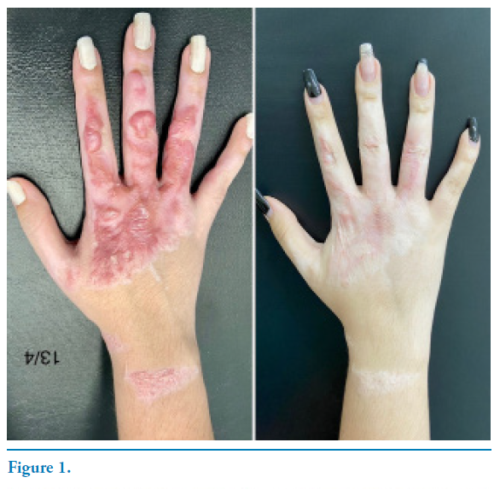
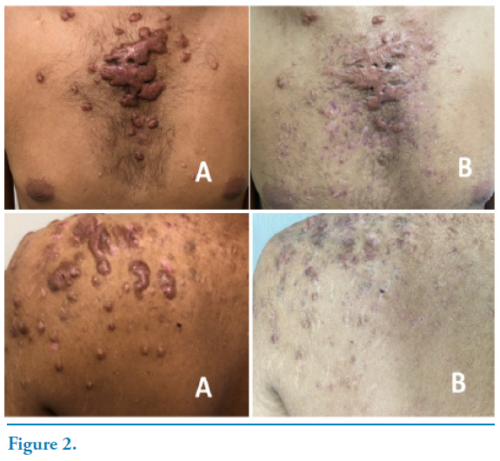
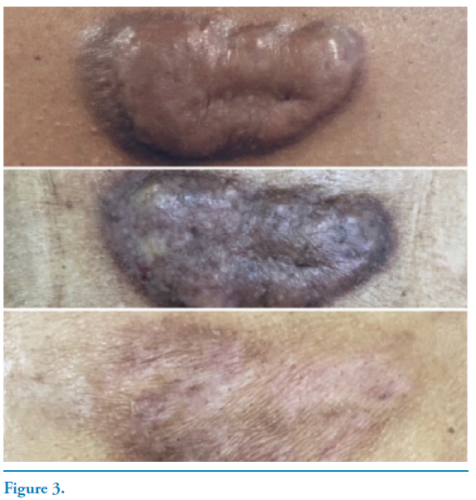
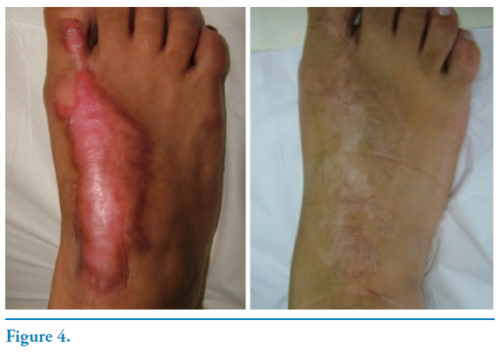
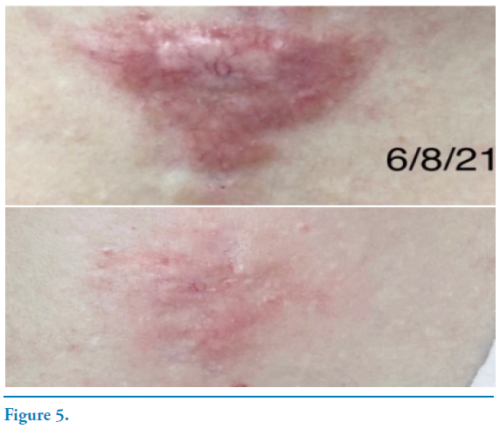
The use of the ASAP algorithm has prevented that several keloids and hypertrophic scars develop post steroids atrophy; the use of dressings before injections has allowed for easier and less painful treatment sessions; technologies might be combined with injections to help softening the scars and keloids; finally the use of several treatments such as topical drugs, lasers, microneedling and peelings, 8-methoxypsoralens and fat grafts help improve the quality of the skin, leading to natural results. Lower rates of recurrences are seen. Patient´s case reports 1-5, treating using the ASAP algorithm, are presented (FIGURES 1-5).
CONCLUSIONS
The ASAP protocol has been extensively used in our ambulatory, focused in treating K/HS; it is a simple protocol helps organizing the several steps needed to improve those lesions, that may be used as a guide to treat virtually any hypertrophic and keloidal scar after trauma, surgery, piercings, acne, viral diseases that affect skin and burns.