Background:
Telemedicine is an evolving method of telecommunication designed to provide healthcare at a distance. Given the visual nature of keloid scars, telemedicine is an ideal method to treat patients who live far away from medical facilities. Telemedicine also provides a cost effective method of treatment for persons who live in remote and rural settings, who would otherwise not have access to medical care.
Methodology:
A young Nigerian woman (O.I) embarked on her journey to the 4th International Keloid Symposium in France to seek a solution to her keloid scars problem since the age of Two (2). O.I. asked DR Pat Yap to help her to treat her symptoms of pain and itchiness which have prevented her from getting a full night sleep. Despite using many of the latest treatments, all her existing keloid scars continued to grow with new keloid scars forming; either spontaneously or as a result of minor trauma. Dr. Yap informed her that all the existing treatment can be used adjunct to Keloflat corticosteroid cream.
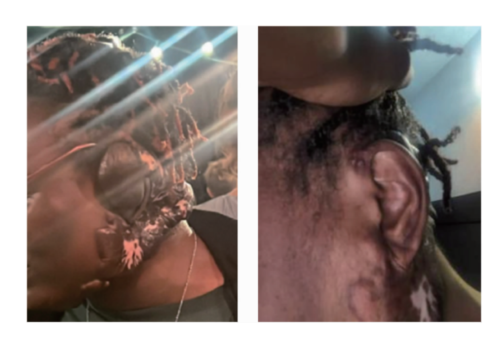
Fig1. O.I. was provided with Keloflat corticosteroid cream, she was asked to apply the cream with or without occlusion, after bathing twice a day.
In the span of a week O. I. experienced mitigation of her symptoms; pain and itching, she is now able to sleep through the night. After O.I. used Keloflat corticosteroid cream for eight (8) months on her left ear she was then able to have it surgically removed by her plastic surgeon due to the softening of the keloid and ease of handling during surgery. After two weeks when the sutures were removed, she was able to use Keloflat corticosteroid cream to prevent keloid scars from forming. In conclusion, telemedicine and the use of Keloflat corticosteroid cream provides a solution oriented approach to the management of keloid scars. It provides an opportunity for remote consultation, initiation of treatment and appropriate continuation of care, as needed. The Keloflat corticosteroid telemedicine approach can work in isolation but also serves as a helpful complement to other traditional modalities for keloid scar therapy - corticosteroid injections, surgery, laser therapy, cryotherapy and radiation. The combination of this approach and conventional treatments has the potential improve patient outcomes in patients who would not otherwise have access.