
Real‑world Effectiveness And Safety Of Bleomycin In Patients With Keloids And Hypertrophic Scars: A Systematic Review And Meta‑analysis

Qimeng Wang, Zhesheng Ren ,Wenyu Jin ,Zhehu Jin

BACKGROUND

The available treatment methods of pathological scars such as surgery, laser, and steroid injection have unstable efficacy and high recurrence rates. Therefore, there is an urgent need for more effective treatment methods with low recurrence rate. Bolemycin, as a traditional anti-tumor drug, has received widespread attention in scar treatment in recent years, but there is currently no exploration on its real-world data.

OBJECTIVE

This study aims to conduct a meta-analysis and integrate multiple studies based on
real-world data to systematically evaluate the effectiveness and safety of bleomycin in treating keloids and hypertrophic scars.

METHODS

This study searched PubMed, Embase, and Cochrane databases and included
8 retrospective studies on the use of bleomycin for treatment, covering a total of
562 patients with keloids and hypertrophic scars. The primary evaluation measures
included the flattening rate of scars, adverse reactions, and recurrence rate. In
addition, subgroup analysis was conducted to evaluate the therapeutic differences
among patients from different countries, utilizing various treatment methods, and
with different genders.

Download PDF File

METRICS

Real‑world effectiveness and safety of bleomycin in patients with keloids and hypertrophic scars: a systematic review and meta‑analysis

Email Article

QIMENG WANG1, ZHESHENG REN ,WENYU JIN, ZHEHU JIN*

*Keloid and Hypertrophic Scar Research
Center, Dermatology and Venereology
Branch of the Chinese Medical Association;
Key Laboratory of Dermatology
and Venereology in Jilin Province, Yanji,
Jilin,133000, China.

Running Title
Real‑world effectiveness and safety of bleomycin in patients with keloids and hypertrophic scars: a systematic review and meta‑analysis

KeyWord: bleomycin; keloid; hypertrophic scar ; meta-analysis

Word Count - 350 Words

RESULTS

After treatment with bleomycin, 90% of patients achieved significant flattening (95% confidence interval (95%CI): 0.75-0.99), 5% achieved moderate flattening (95%CI: 0.01-0.13), 4% achieved minimal flattening (95%CI: 0.00-0.13). The recurrence rate after treatment was only 3% (95%CI: 0.00-0.08). Adverse reactions mainly included hyperpigmentation (with an incidence rate of 8%, 95%CI: 0.00-0.24), and ulceration and skin atrophy (with an incidence rate of 0%), indicating a high safety. The subgroup analysis results showed that 91% (95%CI: 0.73-1.00) of patients with significant flattening were treated with bleomycin alone, while 79% (95%CI: 0.82-0.94) were treated with bleomycin combined with triamcinolone acetonide, but the difference was not statistically significant. In addition, after treatment with bleomycin, the proportion of patients with significant flattening in Western countries reached 99% (95%CI: 0.97-1.00), while it reached 57% (95%CI: 0.40-0.73) in Asian countries. Finally, there was no significant difference in the significant flattening rate between males and females after treatment (RR: 0.95; 95%CI: 0.78-1.15; P=0.77), and the results were not statistically significant.

CONCLUSION

After Bolemycin has significant therapeutic effects in the treatment of keloids and hypertrophic scars, with a low recurrence rate and high safety.
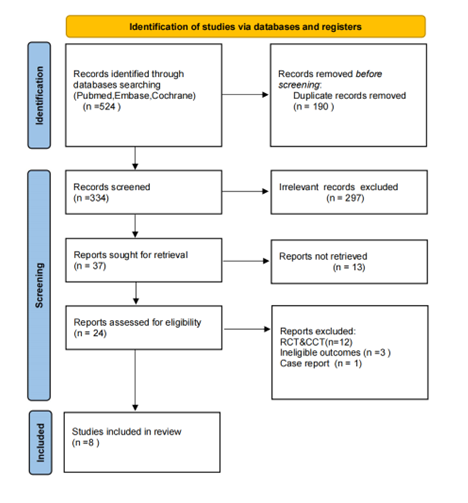
Figure 1. Flowchart of the process of systematic search and literature screening
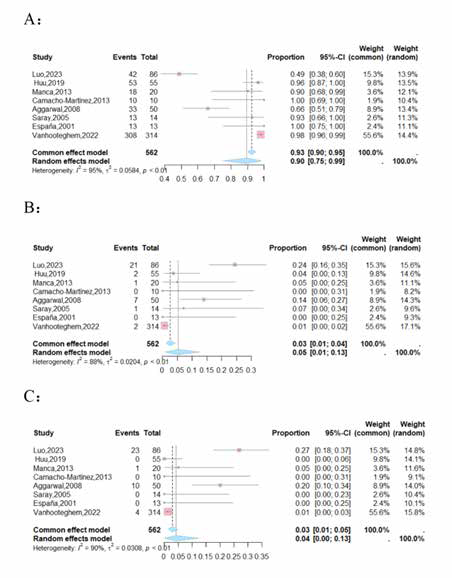
Figure 2. Forest plot showing flattening changes in pathological scars after bleomycin treatment: significant flattening (> 75%) (A), moderate flattening (50% to 75%) (B), and minimal flattening (< 50%) (C)
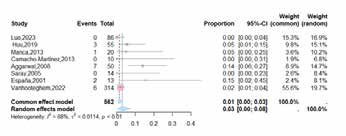
Fig. 3 Forest plot showing recurrence after bleomycin treatment
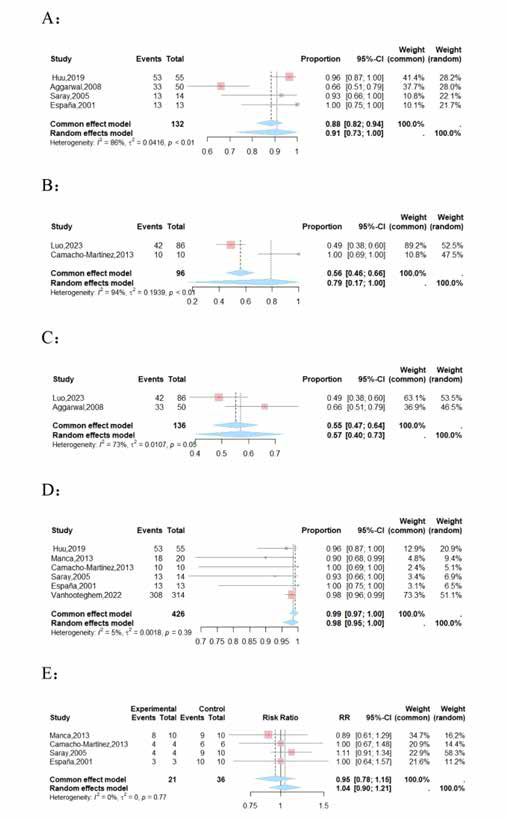
Fig. 4 Subgroup analysis
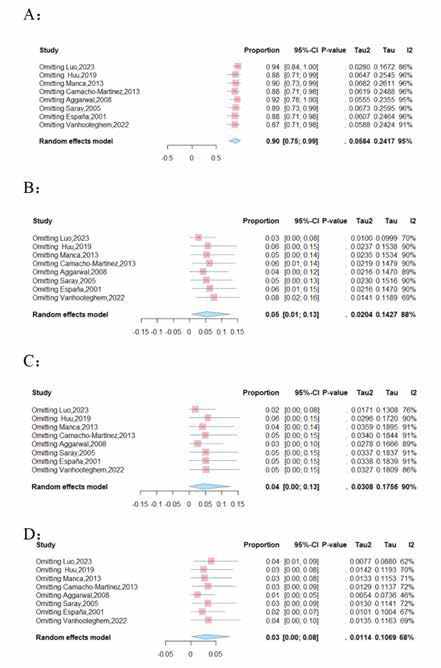
Fig. 5 Forest plot of sensitivity analysis of included studies: the figure shows the sensitivity analysis results of the 8 included studies in this meta-analysis. Sensitivity analysis of significant flattening changes (A), moderate flattening changes (B), minimal flattening changes (C), and recurrence (D)
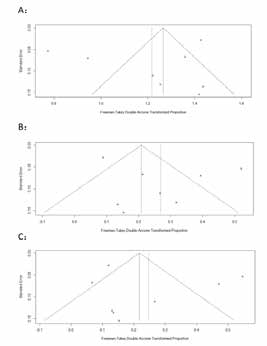
Fig. 6 Funnel plot of all 8 included studies in this meta analysis, evaluating the changes in height of pathological scars treated with bleomycin



Leave a Reply