BACKGROUND
The ASAP algorithm is a rational, sequential and multi-modal nonsurgical treatment specifically designed for the management of hypertrophic scars and keloids. The acronym ASAP refers to: A, assessment of the lesion; S, soften using occlusive dressings; A, approach the scar or keloid with synergistic combination of advanced energy-based technologies and intralesional injectable antifibrosant drugs; and finally, P, pigmentary alteration treatment. Also, its revisited version, published in 2026, includes the benefits of microneedling and pharmacotherapy (exemplified by verapamil and botulinum toxin), along with picosecond laser to improve hyperpigmentation.
METHODS
Prospective cohort of 354 keloids in 280 patients treated at a dermatology outpatient clinic in Brazil and managed with the ASAP sequential algorithm. The unit of analysis is the lesion, and data include demographic, clinical, treatment, and outcome information. The primary outcome evaluated was keloid flattening, categorized as complete, nearly complete, or partial. Statistical analysis was performed using Python (libraries: pandas, scipy, and numpy). Non-parametric Mann-Whitney and chi-square tests were selectively utilized to account for the non-normal distribution of continuous variables and the inherent discrepancies in sample sizes among the various clinical subgroups.
RESULTS
The majority of patients are female (72%, F:M ratio of 2.58:1), with a median age of 33.5 years. The primary etiologies of the keloids were surgical trauma (81 cases), acne (79 cases), and piercing/earring (47 cases); the most affected regions were the ear, shoulders/posterior trunk, and pre-sternal area. Of the 206 patients with a recorded complete outcome, 173 underwent laser treatment and 30 did not. Seventy-seven out of 173 patients (44.5%) treated with laser achieved complete or nearly complete flattening, while only 5 out of 30 patients (16.7%) treated without laser achieved the same outcome, indicating a four times higher odds of flattening for those who used laser (OR = 4.01, Fisher's exact test, p = 0.004), revealing a statistically robust difference even with varying sample sizes. In the analysis by strict resolution (only "complete," excluding "nearly complete"), statistical significance was maintained, demonstrating 30.1% with laser and 13.3% without laser. Furthermore, the standard therapeutic expectation is that patients who sought treatment earlier would have better results; however, surprisingly, the overall median time between trauma and the first consultation was 37 months (~3 years), suggesting a significant prolonged treatment latency within the study population. The statistical test (Mann- Whitney, p = 0.61) confirms there is no significant difference between groups, evidencing that the delay time does not predict the result. As evidence, patients with an interval of 6 to 12 months until the start of treatment presented 27.8% keloid flattening; those in the 12 to 24-month interval had a reduction of 26.3%; while the 24 to 60-month group presented 25.0%; and, notably, the group with more than 60 months post-trauma exhibited the highest rate of flattening, reaching 42.6%. For patients who sought treatment within 6 months after trauma, only two cases reached a defined outcome; therefore, sample size was insufficient for statistical inference in this subgroup. Accordingly, it was statistically
observed that the true predictor of treatment success was the duration, not the treatment latency, as shown in Table 1, given that patients who experienced complete flattening had a median of 12 months of treatment, while those with a partial response had 4.5 months (p < 0.0001).
CONCLUSION
The findings suggest that the laser is a critical component in the treatment of keloids (OR=4.01), such that those treated have a 4 times higher odds of flattening. Furthermore, the paradoxical superior response in chronic, mature keloids may be explained by three primary hypotheses: old lesions are biologically more stable and exhibit diminished inflammatory activity, facilitating flattening; furthermore, patients with chronic lesions often demonstrate higher psychological motivation and consistent long-term adherence; and the therapeutic initiation timing is secondary to treatment duration. Finally, it is important to highlight that a minimum period of seven months is crucial, given that the treatment of keloid disorder is complex and long-term. The data reveal that the flattening rate varies drastically with the duration of therapy, presenting a therapeutic inflection point of response at seven months, when the majority of patients begin to achieve the expected results.
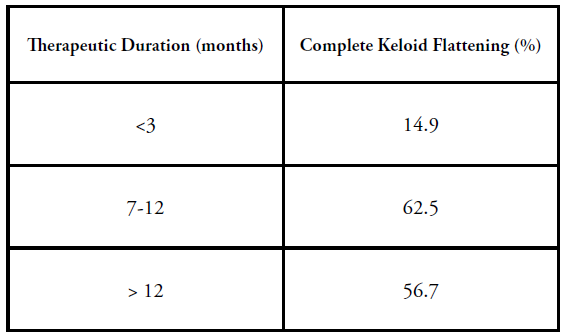
Table 1. The first column displays the treatment duration using the
ASAP algorithm (in months), while the second column presents
the percentage of patients achieving complete keloid flattening.
The data suggest a therapeutic inflection point at approximately
7 months, after which more than half of the patients reach the
desired clinical outcome.